
Style the room around the light
The best spot for a plant starts with the window. The beautiful room follows from there.
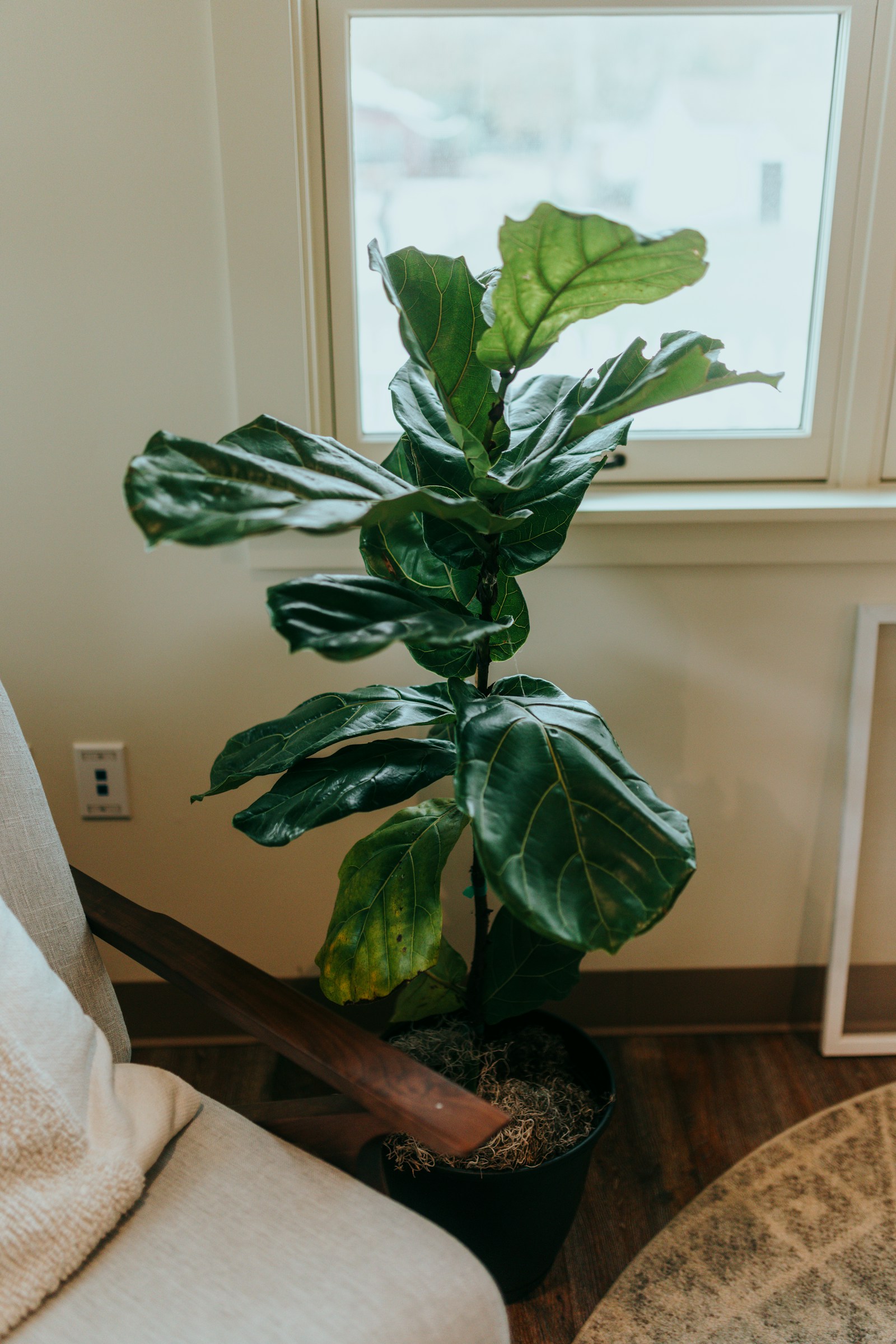
Illustrative stock interior. Photo by Nathan Dumlao on Unsplash.
There is usually one corner that seems to demand a plant. Perhaps it is beside the sofa, beneath an empty shelf, or in that awkward gap the furniture refuses to solve. The composition is obvious. The light is less cooperative.
Start with what reaches the leaves, then build the arrangement around it. You can still have a room with a little drama. Give the drama to the pots.
Take a daylight walk
Look at your possible plant locations in the morning, around midday, and later in the afternoon. Note where direct sun lands and how long it stays. Check the actual shelf or tabletop, not just the window beside it. A bright room does not offer identical light everywhere.
Window direction is a starting clue, not a guarantee. Curtains, nearby buildings, trees, and the season all change the light that arrives. Light also falls as distance from its source increases. The University of Maryland's indoor lighting guide explains why the far end of a console can be a different growing location from the end nearest the glass.
Try a quick sketch of the room. Circle two or three promising positions. Put a small star where you would most enjoy seeing a plant, then see whether those marks overlap. That overlap is your first shopping brief.
Choose the plant before the pedestal
Match a plant's stated light requirements to one of those positions. The University of Minnesota advises choosing for your available conditions and notes that tolerating lower light does not necessarily mean producing dense growth there. A low-light label is not an invitation to a windowless cupboard. Its lighting guide also covers supplemental lights when daylight is insufficient.
Once the location works, think in shapes. A trailing plant can soften the edge of a cabinet. An upright silhouette can give a low arrangement some height. A broad leaf can sit beautifully against a plain wall. These are design choices, so take the version you enjoy and leave the rest.
For a small grouping, repeat one detail: a pot color, a material, or a rounded shape. Let the leaves supply the variation. Leave enough space to lift each pot out without unthreading a jungle. The arrangement should survive watering day.
Make room for useful equipment
If a grow light is needed, include it in the design from the start. Choose a position with a suitable outlet, a tidy cable route, and room to follow the fixture's placement instructions. A lamp added thoughtfully can be part of the scene instead of a last-minute rescue operation.
Consider the view from your usual seat, then check the view from above. Can you reach the potting mix? Can you remove the inner pot and empty runoff? A beautiful planter is much easier to live with when its working parts remain accessible.
Let the arrangement evolve
Take an occasional photo from the same position and pay attention to new growth. Stretched stems, smaller leaves, or fading color can be reasons to reassess light, although no single symptom diagnoses every problem. Avoid abruptly shifting a shade-adapted plant into strong sun; Minnesota's spring care guidance recommends gradual adjustment.
Leave the awkward dark corner for a sculptural bowl, a print, or a stack of books. Let your living greenery occupy the places where it can grow into the composition. A room does not need a plant in every gap to feel wonderfully green.